
Written by Clifford Roberts; Photography by Johan Viljoen
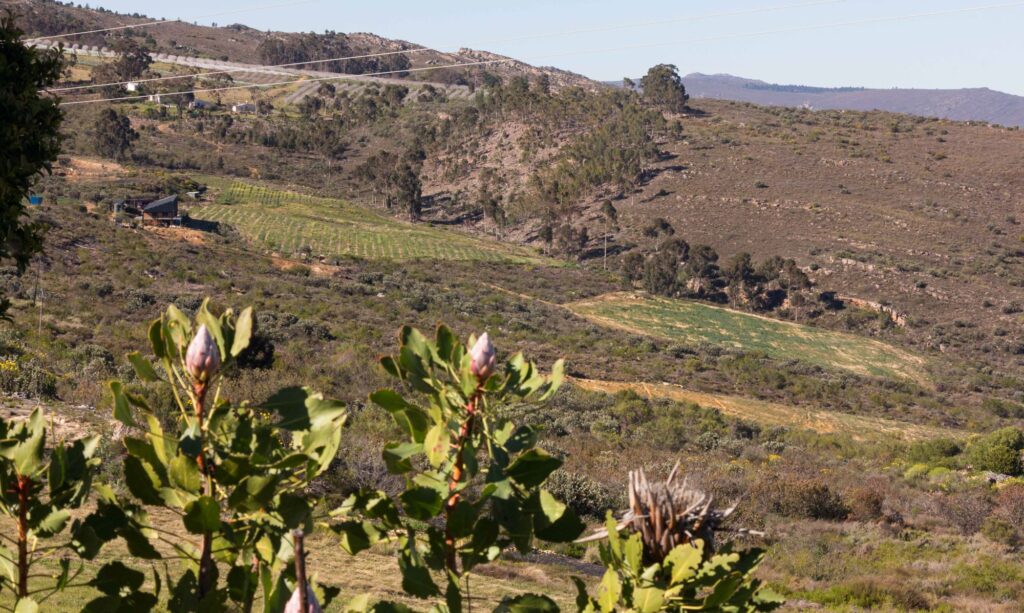
Drive north out of Cape Town on the N7 and, within the hour, the vineyards you know start to disappear. No irrigation lines, no manicured terraces. Wide horizons instead, wheat fields, vines – most crouched low against the wind, roots driven deep into ground that has never once seen a drip line.
This is the Swartland. It’s also, if you look closely enough, a fairly honest snapshot of modern South Africa: unfinished, stubborn, quietly remarkable.
A nation of 11 languages, and every one of them, a story. We carry a weight: inequality, crime, load-shedding jokes that aren’t really jokes. But we also gave the world Mandela’s reconciliation over revenge, a constitution people study, and a spirit that turns braais into democracy in action – everyone’s welcome at the fire. From Cape Town’s mountains to Joburg’s hustle to the Drakensberg’s silence, it’s brutally beautiful and beautifully brutal. We complain about our leaders daily and still stand for the anthem. It is an exquisite complexity mirrored in equal portions in the vineyards of the Swartland.
Ground that fights back
There’s a strong reliance on dryland farming here. No irrigation, no safety net, just long hot summers and roots that have to work for everything. The vines struggle. They produce less. And out of that struggle comes small berries, real concentration, a depth you can’t fake with a hosepipe.
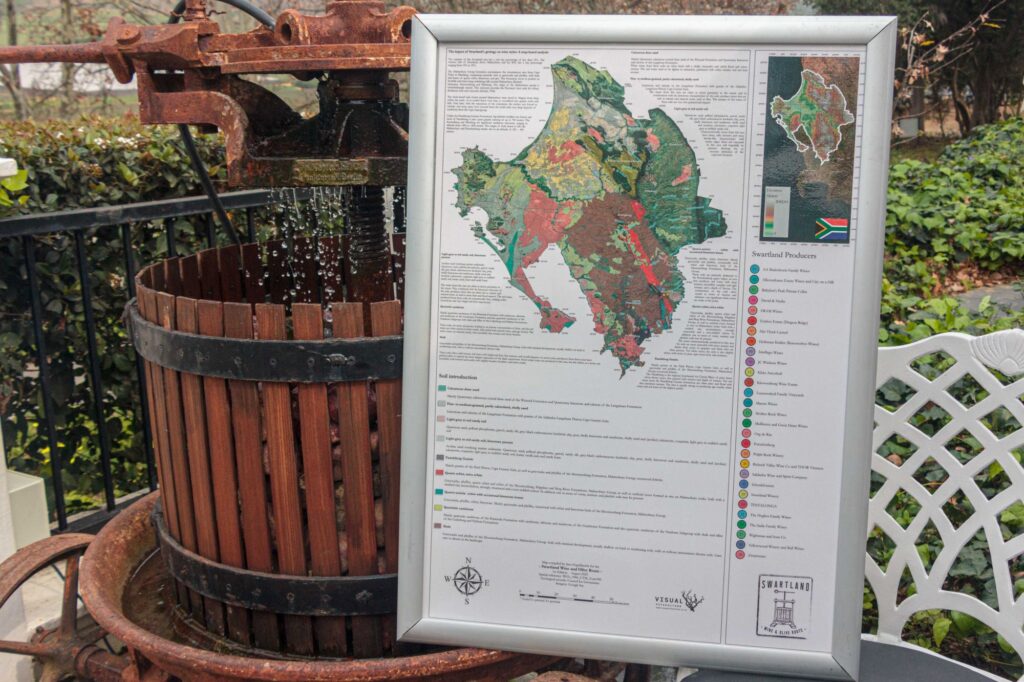
Underneath it all sits some genuinely old geology: shale, granite, iron, schist, layered down over millions of years. It’s this complexity that pushed winemaker Eben Sadie and viticulturist Jaco Engelbrecht to spend two years building something unusual: a farmer-made geological map, nearly 700 distinct soil “polygons” boiled down into nine groupings, showing exactly how ground shapes what ends up in the glass. You can view it, and order a printed copy, on the Swartland Wine & Olive Route website.
A revolution nobody organised
For most of the last century, the Swartland was bulk-wine and wheat country, its grapes sold cheap into co-ops with nobody asking where they came from. That started to change in 1997, when Charles Back bought an old tobacco farm, Klein Amoskuil, and found a block of Sauvignon Blanc on it that turned out to be the oldest in South Africa. Slowly but surely, a loose group of independent winemakers saw the opportunity in land that had been vastly underestimated. There was no institution behind it, no head office. Just a handful of stubborn people making better wine on their own terms in a region everyone else had already dismissed. South Africa is full of these stories: change that starts unofficially, at ground level, long before anyone in charge notices it’s happening. The Swartland just happens to have bottled its version.
Pioneers, unsung heroes, newcomers
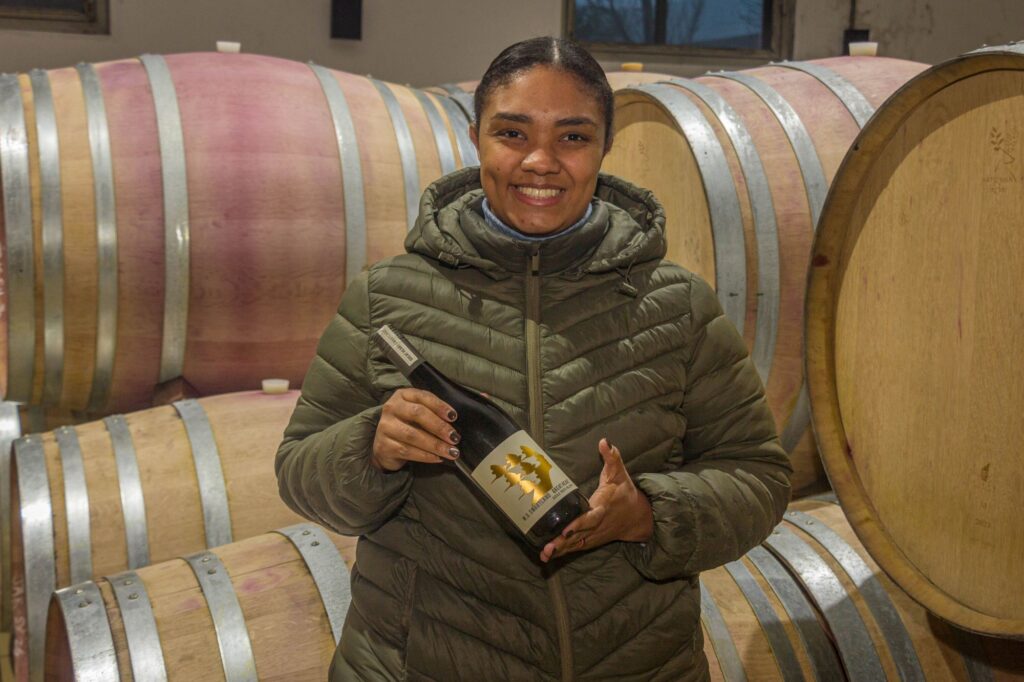
The cast keeps growing and it’s transformative. At Great Heart Wines, winemaker Gynore Hendricks, a Swartland local and Cape Winemakers Guild Protégé graduate, makes wine for a winery owned and run by the very employees of Mullineux and Leeu Passant who work its vines and cellar.
The geography expands too. In 2022, Piket-Bo-Berg was declared one of the Swartland’s newest wards: high-altitude sites, Table Mountain sandstone soils, a climate noticeably cooler than the rest of the region. This is the home of FRAM and Johan Meyer’s Mother Rock wines.
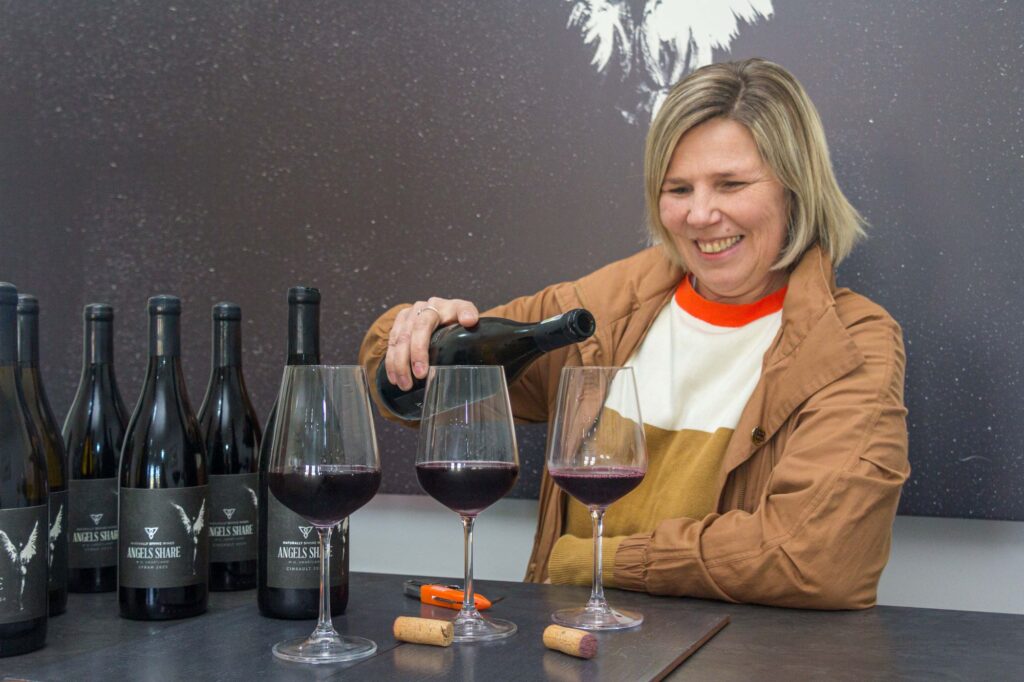
And there are newcomers writing something more personal. Alecia Boshoff, born and raised here, returned to her roots to launch her own label, Angel’s Share Wines. She pours it from Hermitake, her own farmstall. Grapes she picked as a child, now bottled under her own name, poured – when she’s behind the counter – with her own hands.
At Riebeek Valley Wine Company, old vines get their own dedicated range: RAAR, Afrikaans for “rare” or “scarce”, is now built around old, dryland, lesser-known sites whose wines are left to speak for themselves.
Then there’s Klein Amoskuil, the same farm where the modern Swartland story started. Its winemaker Charl du Plessis uses clay qvevri buried in the ground, a fermentation method borrowed from Georgia and thousands of years old, to make wines described as made “the ancient way, unhurried and unfiltered.” New idea, old method. That combination is more or less the whole Swartland in miniature.
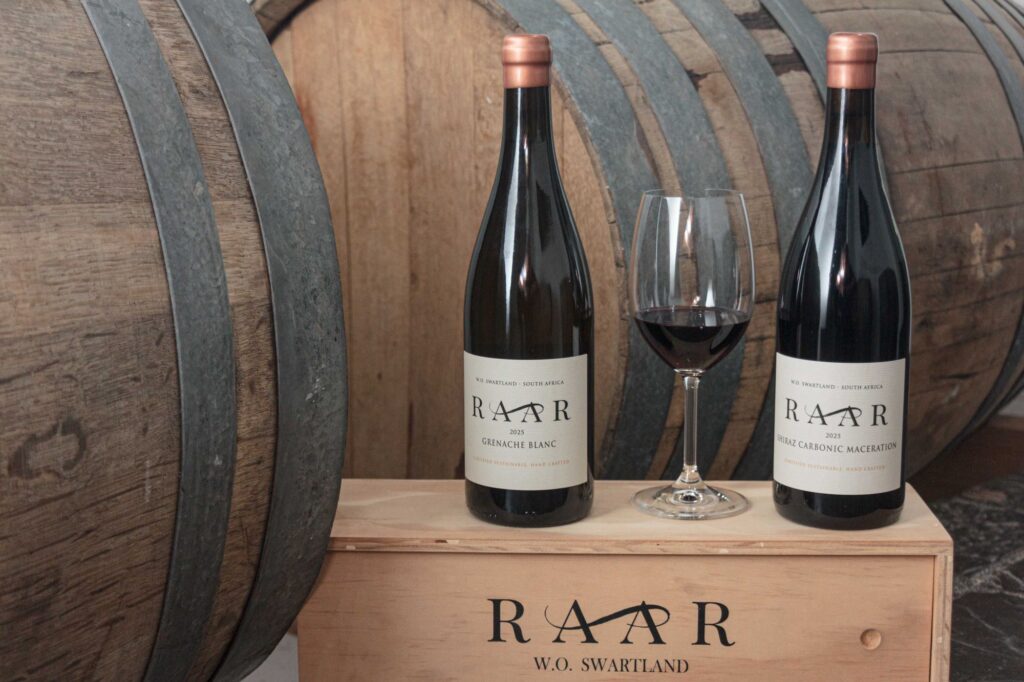
Understated, on purpose
Nobody here is chasing polish. What you get instead is depth that shows itself slowly, wines built for a long table rather than a quick photo. It’s a pace of life that hasn’t been rushed anywhere in particular. It doesn’t need to shout. It never has.
And it isn’t finished. New discoveries keep popping onto the map. Winemakers keep coming home, or arriving for the first time, to work old vines in ways nobody’s tried before. Much like the country around it, the Swartland is still being written.
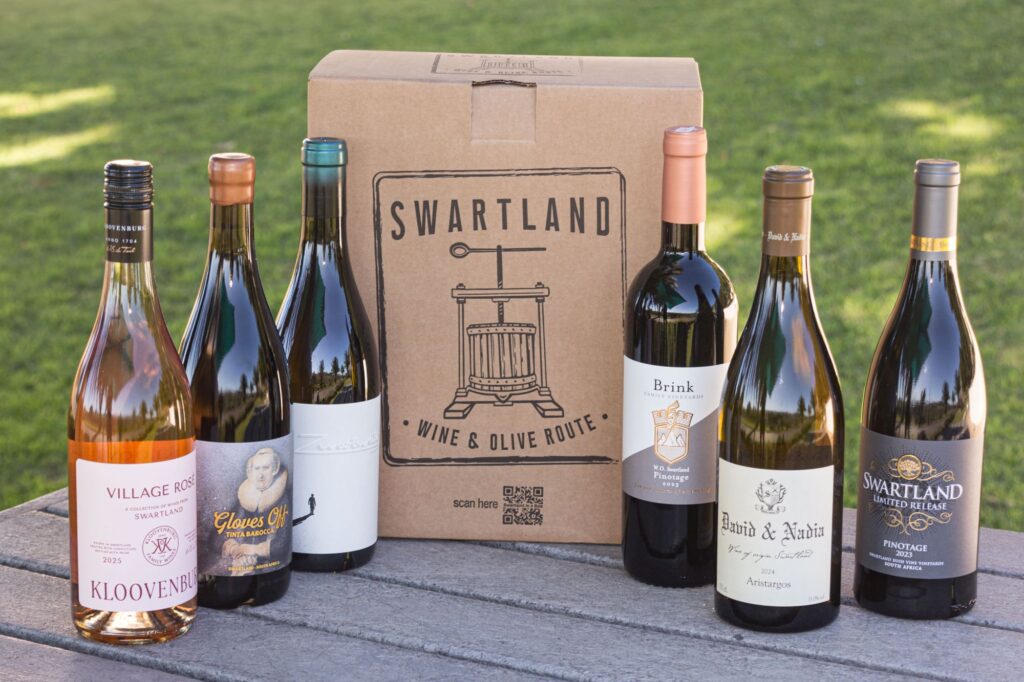
Come taste it
But no location is understood merely by its stories or photographs. Tasting it brings new understanding.
The Swartland Wine & Olive Route sells mixed cases of local wines through its website, a decent place to start if you’re curious. But the better plan is to come yourself. Drive the route, meet the people behind the bottles, and taste why this dry, difficult, ancient stretch of ground keeps producing some of South Africa’s most quietly compelling wine.