
Written by: Clifford Roberts; Photography: Johan Viljoen
Port gets the limelight. Jerez gets the postcards. But tucked into the hills of the Swartland is something older and stranger.
The making of fortified wine in the Swartland is not an act of nostalgia. It is not your grandmother’s sherry trolley, and it is certainly not a category in gentle retirement. What producers here are making is something way more interesting: wines with the kind of expression that can only come from a place this particular about soils and indifference to trend.
The Swartland is a region that built its modern reputation on Chenin Blanc, Syrah and Cinsault, fuelled by winemakers who decided to make wine the way they wanted to. That same spirit – uncompromising, terrain-obsessed, a little wild – runs directly into the fortified wines coming out of local farms.
Engine room of the wine industry
The Swartland’s relationship with fortified wine is not new. For much of the twentieth century, the Swartland was regarded less as a wine region and more as a production facility. It was the engine room of South Africa’s wine industry where grapes left farms by the truckload, destined for co-operatives that processed volume on an industrial scale, with little interest in exactly where the fruit had come from or what it might have been capable of in other hands.
Fortified wine was part of that machinery. The region made plenty of it, but the brief was narrow: sweet, uncomplicated, affordable. By the late 1990s, things began to change in a story that had already been well told. Its evolution towards greater specificity zoomed in on the effects of decades-long maturation and the oxidative complexity in wines. It included, amongst others, the pioneering development of a detailed analysis of Swartland geology and its impact on wine styles.
Through this, the region’s wines were reborn. Equally so, for the foritifieds whose legacy in the Swartland is perhaps among the most ancient.
Solera system
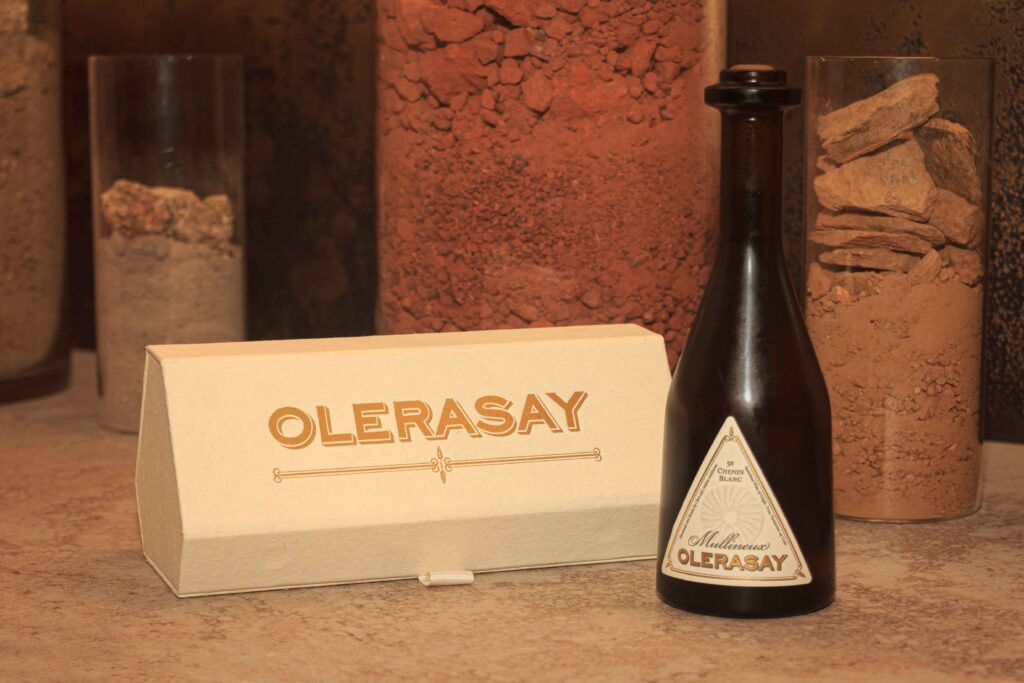
Among the region’s headline wines these days is most certainly the Mullineux Olerasay, a wine from their single-terroir range. The vintage straw wine is made from Chenin blanc on the Paardeberg and is always bottled, but with a few barrels being selected to go into a Solera system of barrel-ageing that started with the Mullineux’s first vintage in 2008. In this way, every vintage contains wine from previous years too.
It is made by harvesting the grapes at normal ripeness and then drying them naturally. “[This] does more than concentrate sugars and flavours,” explains Andrea Mullineux. “It also amplifies the vibrant, zesty acidity. After several weeks of drying, the grapes are crushed and gently pressed into 225-litre barrels, where a long, slow, natural fermentation unfolds. Each year, this fermentation naturally comes to a stop after 8 to 12 months.”
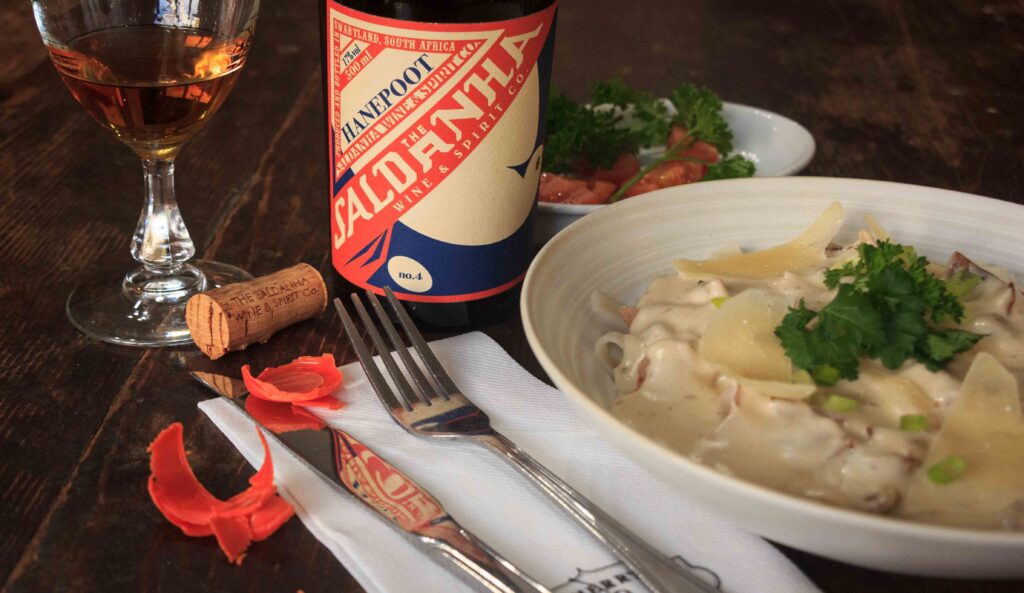
Another prominent producer that has excited collectors has been the emergence of Adi Badenhorst and Selma Willemse’s Saldanha Wine & Spirit Company. It kicked off with sherries, but also makes fortified wines. The wines, they say, are intended to be “modern with an experimental twist”. Hanepoot is among the range that also includes sherry and port – each bottling a once-off, never to be repeated.
AA Badenhorst’s Caperitif vermouth is, of course, also famous and another of the region’s popular fortifieds.
A port pioneer
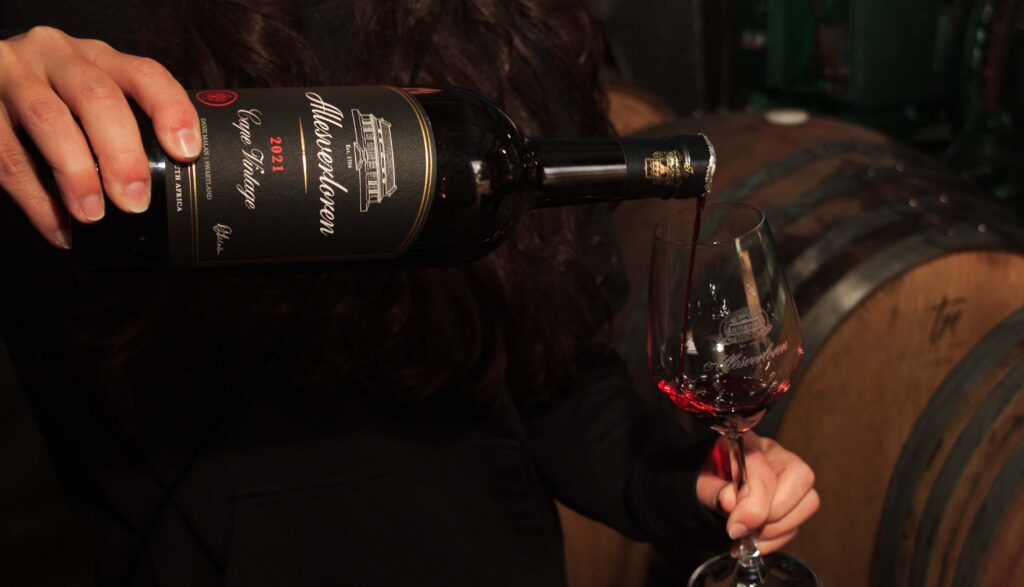
Among the oldest producers in the category is Allesverloren, whose port was not only a pioneer of the style in South Africa, but also became a staple at dinner parties. The Swartland wine estate pioneered the use of Portuguese wine grape varieties in South Africa, and claims the title as the first maker of port-style wine, in 1806.
Its portfolio traditionally incorporates a Cape Vintage and Fine Old Vintage Reserve port, as well as red muscadel.
Much of its contemporary fame came from the work of the late Danie Malan. Now, this legacy is in the hands of the 6th generation Malans – the brother and sister, Fanie and Danielle.
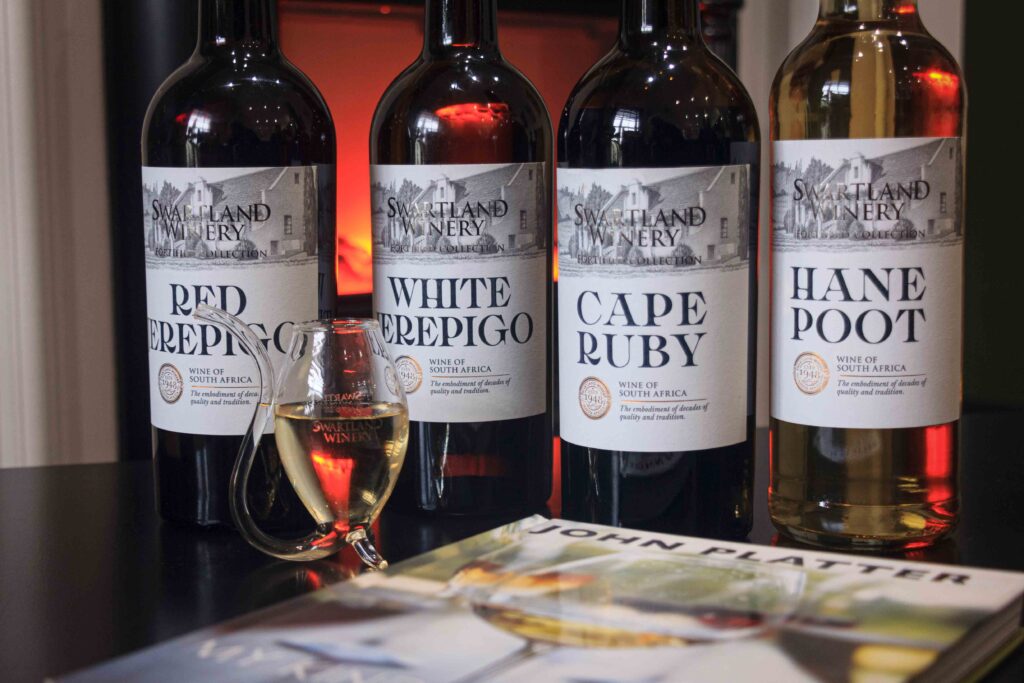
Another local producer that has long held the line for the region’s fortifieds has been the Swartland Winery, which was established in 1948. In 1977, Swartland became the first co-operative in South Africa to bottle, sell, and promote its own brand. In 2006, it converted into a public company.
Swartland Winery produces a Hanepoot, red and white Jerepigo and a Cape Ruby port.
• The Swartland Wine and Olive Route is a member organisation comprising the biggest representation of wine and olive producers of the Swartland region.